Table of Contents
Summary
First rain car accidents in California can happen when accumulated oil, debris, and water make roads slippery. Filipino-American commuters, especially healthcare and night-shift workers, may face additional challenges during dark November drives. Learn how to avoid hydroplaning, respond safely after a collision, and understand your rights under California law.
The first significant rain of the season can make an ordinary California commute more challenging. Roads that have been dry for weeks or months may become slippery as rainwater mixes with accumulated oil, dust, and other roadway residue.
First rain car accidents in California are a particular concern for drivers traveling before sunrise or after sunset, when reduced visibility can make changing road conditions harder to recognize.
For many Filipino-American families, commuting is part of a busy daily routine. Healthcare professionals heading to early hospital shifts, caregivers returning home late at night, and employees working overnight schedules may encounter wet roads when traffic is lighter, but visibility is limited.
Whether you’re driving along Interstate 5 in Los Angeles, Highway 99 near Fresno, or Interstate 805 in San Diego, understanding rainy-weather hazards can help you make safer decisions.
It is also important to know what to do if a collision occurs and how California law determines responsibility.
Why First Rain Car Accidents in California Happen
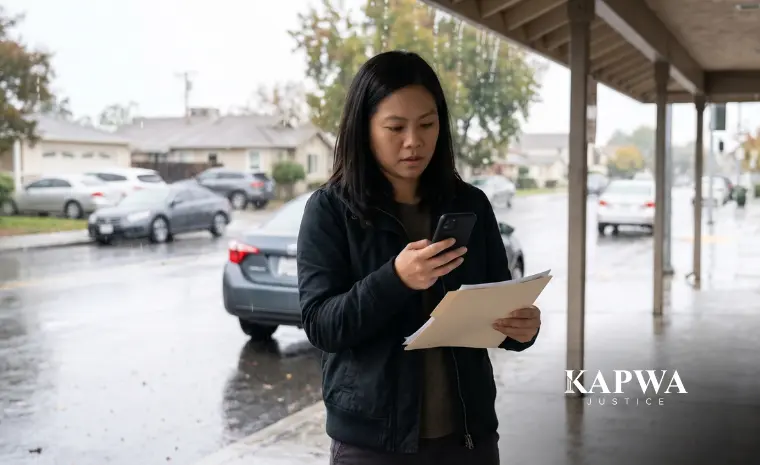
California’s dry periods can allow oil, tire residue, dust, and other materials to accumulate on road surfaces.
When rain begins, these substances may mix with water and temporarily reduce tire traction, particularly before sustained rainfall washes some of the residue away.
However, the first rain does not make every roadway equally slippery. Risk depends on pavement conditions, drainage, rainfall intensity, tire condition, and driving behavior.
Oil and Road Residue Reduce Traction
Vehicles leave behind small amounts of oil and other substances during everyday travel.
After a long dry spell, the initial rainfall can create a slick surface that affects braking and steering.
Drivers who maintain their usual dry-weather speeds may need more distance to stop safely.
Reduced Visibility Makes Hazards Harder to Spot
Rain can limit visibility through windshields and mirrors, especially when combined with darkness, glare, or poorly illuminated roads.
Headlights reflecting off wet pavement may make lane markings, pedestrians, and standing water more difficult to see.
Sudden Braking and Following Too Closely
Wet pavement can increase stopping distances.
When drivers follow too closely or brake suddenly, they may have insufficient time or traction to avoid a collision.
These conditions can contribute to rear-end crashes and multi-vehicle accidents.
Poor Drainage and Standing Water
Roadways with inadequate drainage may develop puddles or deeper areas of standing water.
These hazards can contribute to hydroplaning, particularly when vehicles travel too quickly for the conditions.
Together, these factors can make November car crashes a concern for commuters during California’s transition into wetter weather.
Night and Early-Morning Commutes: The Riskiest Drives After the First Rain
Not every nighttime or early-morning drive is equally dangerous. However, darkness, wet pavement, glare, and fatigue can combine to create challenging conditions.
This is particularly relevant for employees who work outside traditional daytime schedules.
Healthcare Workers Traveling Before Sunrise
Nurses, healthcare technicians, caregivers, and other essential workers may leave home before daylight to begin early shifts.
When the first rain arrives, familiar roads can become more difficult to navigate because of reduced visibility and unexpected slick spots.
For example, a commuter traveling along the 101 Freeway before sunrise may encounter water accumulation near freeway entrances or areas with uneven pavement.
Reducing speed and allowing additional travel time can help drivers respond to changing conditions.
Night-Shift Employees Driving Home After Long Hours
Employees finishing overnight shifts may experience fatigue while navigating dark, wet roads.
Fatigue can affect reaction time and decision-making, particularly when drivers encounter sudden braking or unexpected roadway hazards.
If you feel too tired to drive safely, consider resting before beginning the trip or arranging another way home.
Families Managing School and Work Schedules
Many Filipino-American households coordinate school drop-offs, work shifts, and family responsibilities.
During rainy November mornings, additional travel time may help reduce the pressure to rush through traffic.
A few extra minutes can make it easier to maintain a safe following distance and avoid abrupt maneuvers.
How to Avoid Hydroplaning and Skidding
Hydroplaning occurs when a layer of water reduces or interrupts the contact between a vehicle’s tires and the road surface.
When this happens, steering and braking effectiveness can decrease significantly.
Although hydroplaning is not limited to heavy rainfall, standing water and higher speeds can increase the risk.
Reduce Speed Before Reaching Standing Water
Slowing down before entering a wet section of roadway helps reduce the likelihood of losing traction.
Avoid driving through deep or unfamiliar standing water, especially when you cannot determine the condition of the road beneath it.
Maintain Your Tires
Tire tread helps channel water away from the tire’s contact area.
Before the rainy season, check tire tread depth, inflation pressure, and overall condition.
Worn or improperly inflated tires may increase the risk of losing traction.
Increase Following Distance
Leave additional space between your vehicle and the one ahead.
Wet roads may require greater stopping distances, and extra space provides more time to respond if traffic slows unexpectedly.
Avoid Sudden Steering and Braking
Smooth acceleration, gradual braking, and controlled steering help maintain traction.
If your vehicle begins to hydroplane:
- Ease off the accelerator.
- Look and steer gently in the direction you want the vehicle to travel.
- Avoid sudden steering movements or hard braking.
- Allow the tires to regain traction before making further corrections.
Vehicle stability systems and braking technology may affect the appropriate response. Follow your vehicle manufacturer’s guidance whenever possible.
Check Conditions Before Leaving
The California Department of Transportation (Caltrans) provides QuickMap, which displays information about traffic conditions, closures, and other roadway issues.
Checking conditions before a commute may help drivers plan safer routes.
What to Do After a First Rain Car Accident in California
Even careful drivers can become involved in collisions during rainy conditions.
Knowing what to do afterward can help protect everyone involved and preserve important information.
1. Move to a Safe Location if Possible
If the vehicle can be moved safely and doing so is appropriate, move out of active traffic.
Turn on hazard lights and remain alert to approaching vehicles.
If there are serious injuries, significant hazards, or immediate danger, call 911.
2. Check for Injuries and Seek Appropriate Care
Some injuries may not be immediately apparent after a collision.
Seek evaluation from a medical professional when necessary, especially if you experience pain, dizziness, confusion, or other concerning symptoms.
Following recommended medical treatment can support your recovery and provide documentation of the injuries associated with the crash.
Keep copies of your medical records, prescriptions, treatment recommendations, and medical bills. These documents may become relevant if you later pursue an injury claim.
3. Exchange Information
California drivers generally must exchange identifying and insurance information following qualifying collisions.
Collect the other driver’s name, contact information, license plate number, and insurance details.
4. Document the Road Conditions
If it is safe to do so, photograph:
- Vehicle damage and final vehicle positions
- Standing water or drainage problems
- Skid marks and visible debris
- Traffic signs and signals
- Potholes or damaged pavement
- Roadway lighting and weather conditions
These details may help explain how the collision occurred.
5. Report the Accident When Required
California law imposes reporting requirements for certain traffic collisions.
For example, drivers generally must report qualifying collisions involving injury, death, or property damage exceeding the applicable threshold to the California DMV within 10 days, even if a law enforcement report was completed.
The reporting process may also involve notifying local police or the California Highway Patrol, depending on where the collision occurred and whether emergency assistance is needed.
Keep copies of available accident reports and related documentation. These records may help establish the circumstances of the collision.
6. Notify Your Insurance Company
Review your policy and notify your insurer as required.
Provide accurate information about the incident, but avoid speculating about fault before the circumstances have been investigated.
7. Consider Legal Guidance
If another driver’s conduct or a dangerous roadway condition contributed to the crash, an attorney can help explain the available legal options.
Searching for an auto accident attorney near me may be a starting point, but consider an attorney’s experience with California accident claims, insurance disputes, and the circumstances of your collision.
A personal injury attorney can also review the available evidence, explain potential compensation, and help you understand the claims process.
Who Is Responsible When Rain Causes a Crash?
Rain does not automatically excuse negligent driving.
California drivers must operate their vehicles with reasonable care and adjust their driving to account for weather, traffic, and roadway conditions.
Can a Driver Be Liable for Driving Too Fast in the Rain?
Yes.
Under California Vehicle Code §22350, commonly known as the Basic Speed Law, drivers must not travel faster than is reasonable or prudent for current conditions.
A speed that is lawful in dry weather may still be unsafe during heavy rain or when visibility is limited.
For example, a driver who maintains excessive speed on a wet freeway and rear-ends another vehicle may be found negligent if the evidence supports that conclusion.
What if Both Drivers Contributed to the Collision?
California follows a pure comparative negligence system.
This means an injured person may still recover damages when partially responsible for a collision, but compensation is generally reduced according to that person’s percentage of fault.
For example, if total recoverable damages are $40,000 and the injured driver is found 25% responsible, the damages would generally be reduced to $30,000.
The actual outcome depends on the evidence and applicable law.
What Evidence Helps Determine Fault?
Useful evidence may include:
- Police reports and witness statements
- Traffic-camera or dashboard-camera footage
- Vehicle damage patterns
- Photographs of road conditions
- Weather information
- Accident reconstruction findings
In more complex cases involving commercial trucks, investigators may also review driver logbooks, maintenance records, and available black box data to understand vehicle operation and driver activity before the collision.
When roadway design, drainage, or mechanical failures are disputed, forensic engineers may help evaluate technical evidence.
These investigative methods are not necessary in every accident. Their relevance depends on the vehicles involved and the circumstances of the crash.
An insurance company’s initial fault determination does not necessarily settle the legal question of responsibility.
What Compensation May Be Available After a Rain-Related Crash?
When another party’s negligence causes an accident, injured individuals may be able to seek compensation for economic and noneconomic losses.
Depending on the circumstances, damages may include:
- Medical bills and future healthcare expenses
- Lost wages and reduced earning capacity
- Vehicle repairs and other property loss
- Expenses related to qualifying bodily injury
- Physical discomfort and emotional pain and suffering
- Other legally recoverable accident-related losses
Financial responsibility depends on the evidence of fault, available insurance coverage, and applicable law.
Experienced accident lawyers can assess these factors and explain which damages may be recoverable.
Although an attorney may pursue the maximum compensation supported by the evidence and applicable law, no particular settlement amount or outcome can be guaranteed.
What if the At-Fault Driver Has No Insurance?
California drivers are generally required to maintain applicable financial responsibility coverage.
However, some motorists operate vehicles without sufficient insurance.
If an uninsured or underinsured driver causes a collision, your own uninsured or underinsured motorist coverage may provide benefits, depending on your policy and the circumstances.
An uninsured car accident lawyer may help review coverage provisions, evaluate potential claims, and address disputes with insurance companies.
Road Hazards and Potholes: Claims Against Caltrans or the City
Sometimes a rainy-weather collision involves more than driver behavior.
Poor drainage, deteriorating pavement, or a dangerous pothole may contribute to a crash.
Can a Government Agency Be Responsible?
Under California Government Code §835, a public entity may be liable for injuries caused by a dangerous condition of public property when the required legal elements are established.
Generally, a claim must show that:
- The property was in a dangerous condition.
- The condition created a reasonably foreseeable risk of the type of injury that occurred.
- The condition caused the injury.
- The public entity’s negligent conduct created the condition, or the entity had sufficient notice and opportunity to address it.
Government liability is not automatic simply because a crash occurred on a public road.
Is Caltrans Responsible for Flooding on a Freeway?
Caltrans maintains many California state highways and freeways.
However, a claim involving roadway flooding or drainage problems requires evidence that the agency had a legally relevant responsibility and that the statutory conditions for liability are met.
A city or county may instead be responsible for certain local streets.
Determining which public agency controlled the roadway is an important part of the investigation.
Government Claims Have Shorter Deadlines
California Government Code §911.2 generally requires personal injury claims against public entities to be presented within six months of the injury.
This is different from the general two-year statute of limitations that applies to many California personal injury lawsuits.
Because exceptions and additional procedural requirements may apply, obtaining legal guidance promptly can be important when a public roadway hazard is involved.
How Can an Attorney Help With a Complex Rain-Related Accident?
A legal team with relevant litigation experience may investigate liability, review insurance policies, preserve evidence, and determine whether a government entity or another driver may be responsible.
During a legal consultation, you can ask about the attorney’s experience handling similar cases, possible filing deadlines, and the expected claims process.
Many personal injury attorneys handle qualifying cases on a contingency fee basis, meaning attorney fees are generally calculated as an agreed percentage of the recovery rather than billed upfront.
The written fee agreement should explain the attorney’s fee, case expenses, and any other financial obligations.
Frequently Asked Questions
Why are roads slippery during the first rain in California?
During extended dry periods, oil, dust, and other materials can accumulate on pavement. Early rainfall may mix with these substances and temporarily reduce traction, especially before sustained rain washes away some of the residue.
Are November car crashes more common because of daylight saving time?
The end of daylight saving time brings earlier sunsets, which can increase the amount of commuting done in darkness. When darkness overlaps with wet roads, visibility and traction challenges may occur together. However, accident risk varies by location, weather, and driving conditions.
Can I file a claim if another driver skids into my car during heavy rain?
Potentially. Rain does not automatically eliminate a driver’s responsibility to operate safely. Liability depends on whether the driver failed to use reasonable care and whether that conduct caused the collision.
What if a pothole or flooded roadway caused my accident?
You may have a potential claim against a public agency if the roadway condition meets California’s legal requirements for public-entity liability. These claims involve specific evidence requirements and generally shorter administrative deadlines.
When should I contact an auto accident attorney after a rainy-weather crash?
Consider speaking with an attorney when you have significant injuries, fault is disputed, insurance coverage is unclear, or a dangerous roadway condition may have contributed to the accident.
A confidential consultation may help you understand your legal options, identify important deadlines, and determine whether additional investigation is necessary.
Protect Your Family During California’s Rainy Season
First rain car accidents in California remind us that familiar roads can become unpredictable when the weather changes. Hindi biro ang madulas na daan.
For Filipino-American families, especially those balancing healthcare shifts, overnight work, school schedules, and household responsibilities, safe travel often begins with preparation.
Allowing extra time, maintaining your vehicle, and adjusting your driving to wet conditions can help reduce avoidable risks.
If a collision occurs, documenting the circumstances and understanding California’s liability rules can help you make informed decisions.
At Kapwa Justice, we believe the Filipino-American community deserves accessible information and support as they navigate California’s legal system.
If you or a family member has been involved in a rainy-weather collision, our team can help you understand your options and connect you with appropriate legal guidance.
Have questions about a car accident claim? Contact Kapwa Justice to request a free consultation and discuss your next steps.