Table of Contents
Summary
Thanksgiving road trip accidents in California can disrupt family celebrations, especially when holiday traffic, fatigue, and impaired driving create dangerous conditions. Filipino-American families traveling with children and grandparents can reduce risks by using proper seat belts and car seats and by careful planning. Learn practical safety tips, accident response steps, and California injury claim rights.
Thanksgiving is a time for Filipino-American families across California to gather, share meals, and spend time with loved ones. Whether you’re bringing homemade lumpia to a family gathering, visiting relatives in another city, or traveling with Lolo and Lola for a long weekend, the journey is part of the celebration.
However, busy highways, longer travel times, and holiday celebrations can create challenging driving conditions.
Thanksgiving road trip accidents in California are an important safety concern for families traveling between Los Angeles, Sacramento, Fresno, San Diego, and other communities during the holiday weekend.
For households traveling with several generations in one vehicle, preparation matters. Children need properly fitted restraints, older passengers should be comfortable and securely buckled, and drivers need enough rest to remain alert.
Understanding the risks and knowing what to do after a collision can help protect your family and preserve your legal rights.
Why Thanksgiving Road Trip Accidents in California Increase
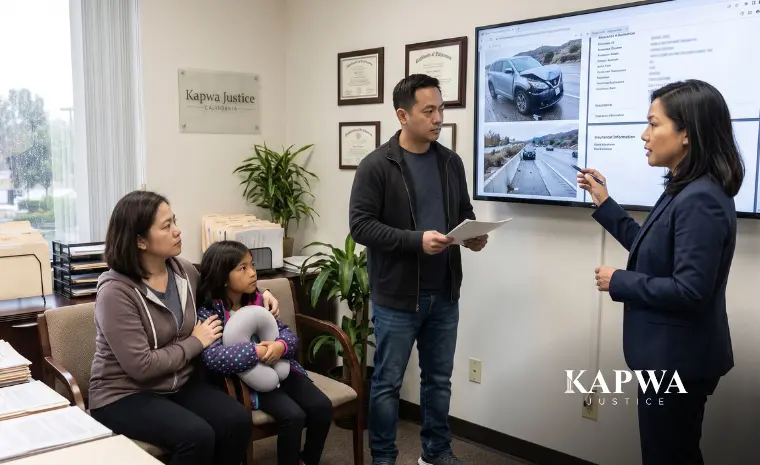
Thanksgiving brings a combination of travel conditions that can increase exposure to traffic hazards.
Although crash patterns vary by location and year, holiday traffic congestion, driver fatigue, impaired driving, and changing weather conditions can contribute to serious collisions.
Heavy Holiday Traffic and Congested Highways
Many California families travel during the same holiday period, particularly on the Wednesday before Thanksgiving and on Sunday, when travelers return home.
Major routes such as Interstate 5, Highway 99, Interstate 10, and Interstate 80 can experience heavy traffic as drivers travel between cities.
Congestion can contribute to sudden braking, rear-end collisions, and unsafe lane changes.
To reduce these risks, consider leaving earlier than planned, checking traffic conditions, and allowing additional time for unexpected delays.
Distracted Driving During Family Trips
Long road trips often involve navigation apps, phone calls, conversations, and passenger requests.
Even brief distractions can affect a driver’s ability to respond to changing traffic conditions.
Before leaving, set your destination, adjust the vehicle’s controls, and ask a passenger to assist with navigation when possible.
Rain, Fog, and Changing Road Conditions
November weather can bring rain, fog, and reduced visibility to parts of California.
Wet pavement may increase stopping distances, while fog can make it harder to recognize traffic hazards.
Drivers should adjust their speed and following distance to match the conditions rather than relying only on posted speed limits.
More Time Behind the Wheel
A drive that normally takes three hours may take considerably longer during holiday congestion.
Extended travel can increase fatigue and frustration, especially when drivers are trying to arrive before a family gathering.
Taking breaks and sharing driving responsibilities with another qualified, rested driver can make the trip more manageable.
Traveling With Lolo, Lola, and the Kids: Seatbelts and Car Seats for Every Passenger
For many Filipino-American families, Thanksgiving road trips include grandparents, parents, teenagers, and younger children traveling together.
A full vehicle can make the trip more enjoyable, but every passenger needs an appropriate seating position and restraint.
Make Sure Every Passenger Has a Seatbelt
Before leaving, confirm that every passenger has a designated seat equipped with a functioning seatbelt.
Avoid allowing children to share seatbelts or sit on another passenger’s lap.
Even during short trips, an unrestrained passenger can face serious risks in a sudden stop or collision.
California Vehicle Code §27315 generally requires qualifying vehicle occupants to use properly adjusted and fastened safety belts.
California Car Seat Requirements for Children
California law establishes specific child passenger safety requirements.
Generally:
- Children under 2 years old: Must ride in an appropriate rear-facing car seat unless they meet a statutory height or weight exception.
- Children under 8 years old: Must be secured in an appropriate child passenger restraint system in the rear seat, subject to legal exceptions.
- Older children: Must use an appropriate restraint or properly fitted seatbelt under the applicable rules.
A child who is legally old enough to use a seatbelt may still benefit from a booster seat if the belt does not fit correctly.
For additional information, review the California Office of Traffic Safety’s Child Passenger Safety Guide.
Help Lolo and Lola Travel Comfortably
Older family members may benefit from additional preparation during long trips.
Before leaving:
- Make sure seatbelts fit comfortably across the shoulder and hips.
- Allow time for rest stops and stretching.
- Keep necessary personal items within easy reach.
- Avoid placing heavy luggage where it could become a hazard.
- Plan stops at accessible locations when needed.
Passengers should not place the shoulder belt behind their backs or under their arms for comfort.
Avoid Overloading the Vehicle
Holiday travel often means bringing food, luggage, gifts, and other supplies.
However, carrying too many passengers or exceeding the vehicle’s weight capacity can affect handling and braking.
Check the manufacturer’s passenger and cargo limits, and secure loose items before driving.
If your family needs more seating than the vehicle provides, consider using an additional vehicle rather than traveling without proper restraints.
Drowsy Driving After Long Shifts: A Hidden Holiday Risk
Thanksgiving travel can be especially demanding for Filipino-American families whose work schedules include overnight or extended shifts.
Healthcare workers, caregivers, hospitality employees, and other essential workers may finish work and immediately begin a long drive to visit relatives.
Why Driving While Tired Is Dangerous
Fatigue can affect reaction time, attention, and decision-making.
A tired driver may have difficulty maintaining lane position, recognizing hazards, or responding quickly to sudden changes in traffic.
In severe cases, a driver may experience a brief episode of unintended sleep while the vehicle is moving.
Research on driver fatigue also shows that sleep deprivation can slow reaction times, making it harder to respond to sudden braking, changing traffic signals, or unexpected obstacles.
Warning Signs of Drowsy Driving
Watch for signs such as:
- Frequent yawning or heavy eyelids
- Difficulty remembering the last few miles
- Drifting toward another lane
- Missing exits or traffic signs
- Repeatedly correcting steering
- Trouble maintaining concentration
If these symptoms appear, stop at a safe location and rest.
Opening a window, increasing the music volume, or drinking coffee should not be treated as substitutes for adequate sleep.
How Families Can Prevent Fatigue-Related Crashes
If you are finishing a night shift before Thanksgiving, consider sleeping before starting your road trip.
Families can also arrange for another rested, licensed driver to take over part of the journey.
Plan breaks along the route and avoid scheduling a long return trip immediately after a demanding day.
Arriving later than expected is preferable to continuing a drive when you cannot remain alert.
Drunk Drivers During the Holiday Weekend
Thanksgiving celebrations may involve alcohol, and some drivers make the dangerous decision to operate a vehicle after drinking.
The risk can be especially concerning during evening travel, when visibility may already be reduced.
Why California DUI Accidents Are a Holiday Concern
Alcohol can impair judgment, coordination, reaction time, and the ability to recognize hazards.
According to the National Highway Traffic Safety Administration (NHTSA), 910 people were killed in drunk-driving crashes nationwide during Thanksgiving holiday periods from 2020 through 2024.
These national figures illustrate why impaired driving prevention remains important during holiday travel.
Alcohol impairment is commonly evaluated using blood alcohol concentration (BAC), which measures the amount of alcohol in a person’s bloodstream. Under California law, the applicable BAC limits depend on factors such as the driver’s age and vehicle type. Importantly, a driver may violate DUI laws even when their BAC is below a particular statutory threshold if alcohol or drugs impair their ability to drive safely.
What Should You Do if You Notice a Suspected Impaired Driver?
Possible warning signs include repeated lane drifting, erratic braking, unusually inconsistent speeds, or unsafe turns.
However, these behaviors can have other explanations and do not establish intoxication by themselves.
If you encounter a potentially dangerous driver:
- Increase your following distance.
- Avoid trying to confront or stop the driver.
- Do not attempt to follow the vehicle.
- Move away from the situation when safe.
- Contact 911 if there is an immediate danger on the roadway.
Can a Drunk Driver Be Held Responsible for an Accident?
Yes. A driver whose impaired operation causes a collision may face criminal consequences and civil liability.
California Vehicle Code §23152 prohibits specified forms of driving under the influence.
In a personal injury case, an injured person may seek compensation when the evidence establishes the applicable elements of negligence and causation.
A DUI arrest or conviction may be relevant evidence, but civil liability still depends on the circumstances.
When law enforcement suspects impairment, officers may conduct an investigation that includes observations of driving behavior, chemical testing, or a field sobriety test. The results may become relevant to determining whether an intoxicated driver contributed to the collision.
However, the reliability and admissibility of individual test results depend on the circumstances and applicable evidentiary rules.
Can Punitive Damages Apply to DUI Accidents?
In certain California drunk-driving accident cases, punitive damages may be available when the required legal standards are met.
Under California Civil Code §3294, punitive damages require proof of circumstances such as oppression, fraud, or malice.
In Taylor v. Superior Court (1979), the California Supreme Court recognized that certain allegations involving conscious disregard for others’ safety while driving intoxicated could support punitive damages.
However, punitive damages are not automatically awarded in every DUI collision.
What to Do After a Thanksgiving Road Trip Accident in California
A collision can be particularly stressful when several family members are traveling together.
Knowing the appropriate steps can help protect everyone’s safety and preserve important information.
1. Check Everyone’s Safety
Check on passengers and determine whether anyone needs emergency assistance.
If there are serious injuries, immediate hazards, or a dangerous roadway situation, call 911.
Avoid moving someone with a suspected serious injury unless necessary to prevent immediate danger.
2. Move to a Safer Location When Possible
If the vehicles can be moved safely and doing so is appropriate, move out of active traffic.
Turn on hazard lights and remain aware of approaching vehicles.
Do not stand in an active traffic lane to photograph the accident.
3. Seek Appropriate Medical Attention
Some accident-related injuries may not be immediately apparent.
If you or a family member experiences pain, dizziness, confusion, or other concerning symptoms, seek appropriate medical evaluation.
Keep copies of medical records, treatment recommendations, and related expenses if an injury claim becomes necessary.
Following recommended medical treatment can help address accident-related injuries while creating documentation of the care received. Medical records may also help establish the nature and extent of injuries when evaluating a personal injury claim.
4. Exchange Information With the Other Driver
Collect relevant information, including:
- Driver’s name and contact details
- Driver’s license information
- License plate number
- Insurance company and policy details
- Vehicle make and model
If there are witnesses, ask whether they are willing to provide contact information.
5. Document the Accident Scene
If safe to do so, photograph the vehicle damage, road conditions, traffic signals, and the surrounding area.
For family trips involving multiple passengers, record where everyone was seated and whether child restraints were in use.
These details may become relevant if the circumstances of the collision are disputed.
Independent witness statements may also help clarify what happened before the crash, particularly when drivers provide conflicting accounts of speeding, lane changes, or suspected impairment.
6. Report the Accident When Required
California drivers must comply with applicable accident reporting requirements.
For example, certain collisions involving injury, death, or property damage above the applicable reporting threshold must be reported to the California DMV within 10 days.
A police report does not necessarily replace the driver’s separate DMV reporting obligation.
7. Notify Your Insurance Company
Contact your insurer as required by your policy.
Provide accurate information about the accident without guessing about details you do not know.
If fault or coverage is disputed, consider obtaining legal guidance before agreeing to a final settlement.
8. Understand Your Legal Options
If another driver’s negligence caused the crash, a California personal injury attorney can help explain liability, available insurance coverage, and potential compensation.
If you are searching for a drunk driving accident lawyer near me, consider the attorney’s experience handling DUI-related injury claims and cases involving multiple injured passengers.
An attorney can also explain the legal process, including insurance negotiations, evidence collection, applicable filing deadlines, and whether filing a lawsuit may be appropriate.
Many personal injury attorneys represent qualifying clients on a contingency fee basis, meaning attorney fees are generally calculated as an agreed percentage of the recovery rather than billed upfront. The written agreement should explain attorney fees, case costs, and any other financial obligations.
For more tips to keep your Thanksgiving weekend safe, not just during travel, but even at home, read: Thanksgiving Safety Tips for Filipino Families in California
What You Can Recover If Another Driver Caused the Crash
California law allows qualifying accident victims to seek compensation for losses caused by another party’s negligence.
The damages available depend on the injuries, supporting evidence, and applicable legal rules.
Medical Expenses
Compensation may include reasonable past and future medical expenses related to the accident.
These may involve emergency care, follow-up appointments, rehabilitation, and other necessary treatment.
Lost Wages and Reduced Earning Capacity
If an injury prevents someone from working, the claim may include lost income.
For example, a healthcare worker who cannot return to scheduled shifts may experience financial losses beyond the immediate medical expenses.
More serious injuries may also affect future earning capacity.
Pain and Suffering
California personal injury claims may include compensation for physical pain, emotional distress, and other qualifying noneconomic losses.
The amount depends on the nature of the injuries, their effects, and the evidence presented.
Property Damage and Other Financial Losses
A claim may include vehicle repair or replacement costs and other recoverable accident-related expenses.
Insurance coverage and the specific circumstances determine how these losses are handled.
Can Multiple Family Members File Claims?
Yes. When several passengers are injured in the same collision, each person may have an individual claim based on their own injuries and losses.
For example, a parent, grandparent, and child involved in the same accident may have different treatment needs and damages.
However, insurance policy limits and other legal issues may affect the compensation available.
What if Your Family Was Partly Responsible?
California follows a pure comparative negligence system.
An injured person’s compensation is generally reduced by their percentage of fault, but partial responsibility does not necessarily prevent recovery.
For example, if a person’s recoverable damages total $50,000 and they are found 20% responsible, the amount would generally be reduced to $40,000.
Each case depends on its evidence and applicable law.
Frequently Asked Questions
Why are Thanksgiving road trips dangerous in California?
Thanksgiving travel may involve heavy traffic, long driving hours, impaired drivers, and changing weather conditions. These factors can increase exposure to roadway hazards, especially when drivers are tired or rushing to reach their destinations.
National traffic fatalities involving impaired driving remain an important concern during holiday travel periods, making responsible driving and adequate rest especially important.
Can I file a claim if my family was injured by a drunk driver?
Potentially. If an impaired driver’s negligence caused the collision, injured family members may have personal injury claims. Liability, available damages, and insurance coverage depend on the circumstances.
What happens if my child was injured while riding in a car seat?
A child may have a personal injury claim when another party’s negligence caused the injuries. The claim may involve medical expenses and other legally recoverable damages. Claims involving minors have additional procedural requirements.
Can a passenger file a personal injury claim after a Thanksgiving accident?
Yes. Passengers may have claims against drivers or other responsible parties when negligence caused their injuries. The availability of compensation depends on liability, coverage, and other relevant factors.
What if the at-fault driver does not have insurance?
Uninsured or underinsured motorist coverage may provide benefits in qualifying situations, depending on the policy and the circumstances. Other recovery options may also be available.
How long do I have to file a car accident lawsuit in California?
California Code of Civil Procedure §335.1 generally provides a two-year statute of limitations for many personal injury lawsuits.
However, exceptions may apply, and claims involving public entities often require earlier administrative action. Claims involving minors may also follow different timing rules.
Should I speak with a lawyer before accepting an insurance settlement?
Legal guidance may be helpful when injuries are significant, several family members are involved, fault is disputed, or the settlement may not account for future expenses.
Once a valid settlement release is signed, additional claims covered by that release may be barred.
Keep Your Family Safe This Thanksgiving
Thanksgiving road trip accidents in California can affect families at a time meant for gathering and celebration.
For Filipino-American households traveling with Lolo, Lola, children, and extended relatives, thoughtful preparation can make a meaningful difference.
Check your vehicle before leaving, secure every passenger properly, plan for traffic delays, and make sure the driver is well-rested.
If a collision happens, prioritize everyone’s safety, document the circumstances, and understand the legal options available under California law.
At Kapwa Justice, we believe Filipino-American families deserve accessible legal information and support when facing unexpected challenges.
Our team can help you understand the next steps after an accident and connect you with appropriate legal guidance.
Mag-ingat sa biyahe. Celebrate together. Protect your family’s rights.
If you or a loved one has been involved in a Thanksgiving road trip accident, contact Kapwa Justice to request a free consultation and discuss your options.