Table of Contents
Summary
Teen driver car accidents can leave Filipino American families dealing with injuries, insurance questions, and potential parental liability. This guide explains California provisional license rules, crash reporting requirements, compensation options, and practical steps parents can take to protect their teen and family after a collision.
Handing a teenager the car keys can bring pride, freedom, and new responsibilities—but one mistake on a busy road may affect an entire family. Teen driver car accidents often increase concerns for Filipino American parents who may need to manage injuries, insurance calls, transportation problems, and possible financial liability at the same time.
In Los Angeles, inexperienced drivers may encounter heavy traffic near schools, at crowded intersections, and on fast-moving routes such as I-5, US-101, and the 110 Freeway. When a collision happens, parents need clear information about safety, insurance, and California law.
Here, we explain the practical steps families should consider.
Why Teen Driver Accidents Increase During the School Year
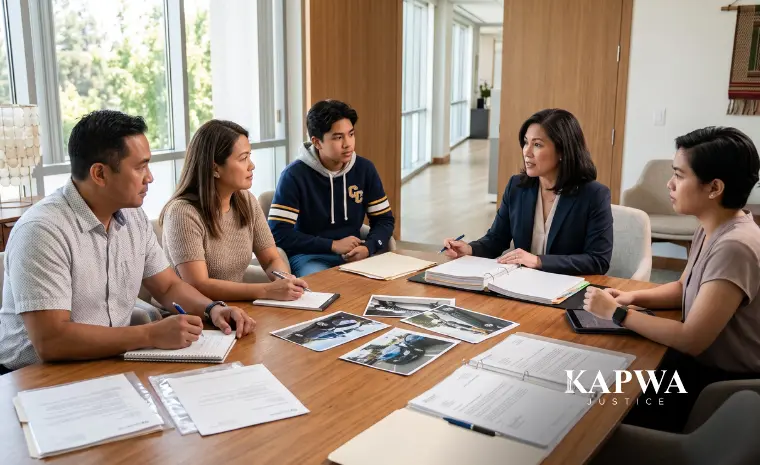
The school year changes how many teenagers use the road. Newly licensed drivers may travel independently to classes, sports practices, part-time jobs, and social activities. Ang matinding traffic sa umaga at siksikang pickup sa hapon ay maaaring magdagdag ng pressure sa isang baguhang teen driver.
Common contributing factors include:
- Distracted driving involving phones, passengers, food, or music
- Speeding when a teen is late for class or an activity
- Improper turns near school entrances and crowded intersections
- Following another vehicle too closely
- Misjudging gaps while merging or crossing traffic
- Driving at night without enough experience
- Failing to adjust for rain, glare, or road construction
National data illustrate the seriousness of the risk. The National Highway Traffic Safety Administration reported more than 2,300 deaths in crashes involving drivers ages 15 to 18 in 2024. Of those, 752 were teen drivers, and 478 were their passengers. Speeding was involved in 33% of fatal crashes involving teen drivers, and passengers can add further distractions.
California Restrictions for Provisional Teen Drivers
California uses a graduated licensing system to give young drivers experience under controlled conditions. A person under 18 is generally considered a provisional driver during the first year after receiving a license.
During that period, the teen generally may not:
- Drive between 11 p.m. and 5 a.m.
- Transport passengers younger than 20 without a licensed driver who is at least 25
- Use a phone while driving, including through hands-free functions, except in an emergency
The state recognizes limited exceptions, including certain school, employment, medical, and family-necessity trips. Documentation may be required. California DMV also requires minors to hold an instruction permit for at least six months, complete driver education and training, and document supervised practice before taking the driving test.
Breaking a provisional restriction does not automatically prove responsibility for an auto accident. However, it may become relevant when investigators evaluate the teen’s conduct, distractions, passengers, and decisions leading up to the impact.
How California Law Can Hold Parents Responsible
Parents do not automatically become fully responsible for every mistake their child makes. Pero may special rules kapag ang parent o guardian ang pumirma sa driver’s license application ng minor.
Under California Vehicle Code Section 17707, a minor’s negligence or willful misconduct while driving may be attributed to the person who signed the application. Section 17708 may also create joint responsibility for the minor and the signer. California requires the appropriate parent, guardian, or custodian to sign most license applications submitted by minors.
Additional theories may apply when a parent:
- Allowed an unlicensed or unsafe teenager to drive
- Provided a vehicle despite a history of dangerous behavior
- Failed to maintain a family vehicle
- Permitted driving that violated known license restrictions
- Entrusted the car to a teen impaired by alcohol or drugs
A California car accident attorney may examine who owned the vehicle, who signed the license application, what the parents knew, and whether the teen had previous violations. These details can affect the available insurance coverage and the scope of a personal injury claim.
What Filipino Parents Should Do After a Teen Is Involved in a Crash
Families may feel pressure to apologize, settle the issue privately, or immediately accept blame. Instead, focus first on safety and accurate information.
Gawin Ang Mga Hakbang Na Ito
- Call 911 when anyone needs emergency care or the roadway remains dangerous
- Ask the teen to remain at the scene and cooperate with responding officers
- Exchange license, registration, vehicle, and insurance information
- Photograph the vehicles, roadway, traffic controls, damage, and visible injuries
- Obtain witness statements and the responding agency’s report number
- Preserve messages, dashcam footage, location data, and relevant social media posts
- Arrange medical treatment and follow-up care when symptoms appear
- Report the collision to their insurance company without guessing about fault
- Keep medical records, receipts, estimates, and vehicle repair documents together
Personal injury lawyers can assess liability and handle insurer communications on the family’s behalf.
A collision must be reported to the DMV within 10 days if anyone is injured or killed, or if property damage exceeds $1,000. Filing an SR-1 is required even if the police or the California Highway Patrol investigate.
How Insurance and Injury Claims Work
After a motor vehicle accident, insurance adjusters may review driver statements, photographs, traffic citations, policy terms, and medical evidence. They may also examine whether the teen had permission to use the car and whether the household policy covers the driver.
Compensation in a personal injury case may include:
Type of loss | Possible examples |
Medical Expenses | Ambulance services, hospitalization, therapy, and medication |
Economic damages | Lost income, damaged property, and transportation costs |
Non-economic losses | Pain, suffering, and reduced quality of life |
Serious injuries | Head injuries, internal injuries, spinal cord injuries, or traumatic Brain injuries |
Fatal losses | Funeral expenses, lost support, and a possible Wrongful death action |
California’s pure comparative negligence rule generally allows responsibility to be divided among everyone whose conduct contributed to a car crash. A teenager may therefore recover damages even when partly responsible, but the award may be reduced according to the assigned percentage of fault.
Liability could also extend beyond the drivers. For example, defective brakes or steering components may raise questions about an auto manufacturer, while unsafe road conditions could involve a government entity. These claims may be subject to different notice requirements and deadlines.
For many injury lawsuits, the statute of limitations is generally 2 years from the date of injury. Claims involving public entities may require action much sooner.
Helping Your Teen Become a Safer California Driver
Parents can reduce risk by treating a license as a continuing learning process rather than a completed milestone.
Consider establishing household rules that address:
- No phone use while the vehicle is moving
- No unauthorized passengers
- Seat belts for every occupant
- No driving while tired, upset, impaired, or rushed
- Check-in procedures for longer trips
- Reduced driving during rain or heavy traffic
- Immediate disclosure of tickets, damage, or near misses
Practice routes around Dodger Stadium, Koreatown, school zones, parking structures, and freeway entrances before allowing solo trips. A teen who can manage local streets may still need supervised practice before driving through congested parts of Southern California.
Parents should also review coverage limits before a car accident occurs. Minimum coverage may be insufficient when vehicle collisions result in severe injuries, significant medical bills, or long-term medical care.
Families should confirm that all household drivers are properly listed and ask whether uninsured or underinsured motorist coverage applies to their insurance claims.
Frequently Asked Questions
What is the top cause of accidents among teen drivers?
No single factor causes every collision, but inexperience is a central risk. Speeding, distraction, unsafe following distance, poor hazard recognition, and passenger-related distraction frequently contribute. The circumstances of each negligent driver must be evaluated separately.
Is it normal for teenagers to get into car accidents?
Collisions are not inevitable, but teen drivers have an elevated risk. Parents should treat even a minor incident as an opportunity to review what happened, correct unsafe habits, and determine whether additional supervised practice is needed.
Can a teen receive compensation when partly at fault?
Potentially. Under California’s pure comparative negligence rule, an injured teen’s compensation may be reduced rather than completely barred. A California car accident attorney can review the evidence and explain how fault allocation may affect the claim.
Secure the Guidance Your Family Needs
Teen driver car accidents can create legal, financial, and emotional pressure for the whole household. Early action can preserve evidence, clarify policy coverage, and prevent damaging statements during the legal process.
Kapwa Justice supports Filipino American families across Los Angeles and other California counties. Our team can connect you with personal injury attorneys who can evaluate car accident cases, explain your options, and communicate with insurers.
Contact us for a free consultation with a personal injury law firm serving Fil-Am communities throughout California.