
Table of Contents
Summary
What should I do after a slip-and-fall in California? This guide explains important steps after a fall accident, including medical care, evidence collection, California premises liability laws, insurance concerns, and legal considerations. Filipino-American families can also learn how documentation and early action may help protect health and potential legal rights.
A sudden fall inside a grocery store, apartment complex, restaurant, or parking lot can leave families overwhelmed and uncertain about the next step. Many Filipino-American families ask, “What should I do after a slip-and-fall when medical concerns, missed work, and financial pressure begin to build?”
In California, slip-and-fall accidents may involve unsafe walkways, poor lighting, broken flooring, or liquids on the floor that create preventable risks for visitors. Ang agarang pag-aksyon pagkatapos ng fall accident ay maaaring makatulong para maprotektahan ang iyong health at posibleng legal claim.
Because every slip-and-fall situation is different, understanding the proper next steps may help families avoid common mistakes during recovery.
Prioritize Safety And Seek Medical Attention
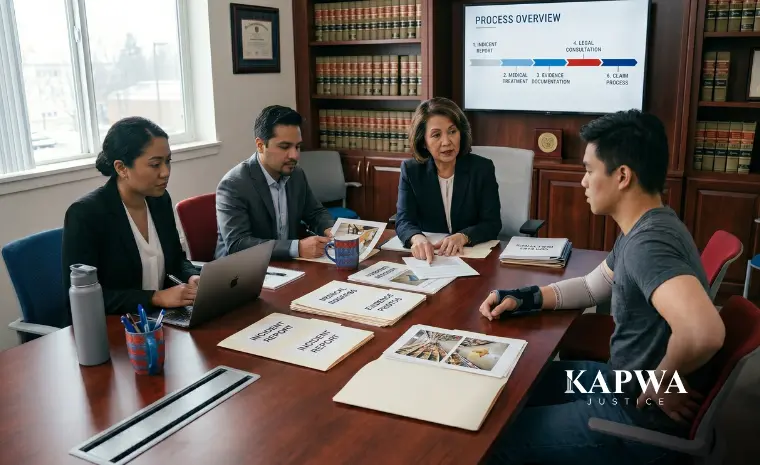
Your health comes first after a slip-and-fall. Some injuries appear minor at first but become more serious later. Head trauma, back injuries, fractures, or internal injuries may not show immediate symptoms.
Seek medical attention as soon as possible, even if the pain feels manageable.
Prompt medical care may help:
- Detect hidden injuries
- Create official medical records
- Connect injuries to the incident
- Support future treatment needs
- Prevent complications
Some victims may require physical therapy, surgery, or even a hip replacement, depending on the severity of the fall.
Keep copies of:
- Medical evaluations
- Prescriptions
- Imaging results
- Treatment recommendations
- Medical expenses receipts
- Your treatment plan
These records may become important if a Legal Claim is later pursued.
Report The Incident Immediately
Notify the manager, supervisor, landlord, or property owner right away.
Request a formal report or an incident report before leaving the scene. Request a copy if possible.
The report should include:
- Date and time
- Exact location
- Cause of the fall
- Witness names
- Visible injuries
- Hazard details
Tandaan na maaaring mawala o mabura ang evidence kung hindi ito agad ma-request o ma-document.
Gather Evidence At The Scene
Evidence may disappear quickly after a trip-and-fall accident. Spills get cleaned. Warning signs get moved. Surveillance systems may overwrite footage.
If physically able, collect evidence immediately.
Helpful Evidence Checklist
Evidence Type | Why It Matters |
Scene photographs | Shows unsafe conditions |
Surveillance footage | May capture how the fall happened |
Witness statements | Supports your version of events |
Witness Information | Helps investigators contact witnesses |
Maintenance records | May reveal ignored hazards |
Receipts or location proof | Confirms presence at the property |
Take photos of:
- Wet floors
- Broken tiles
- Uneven pavement
- Missing warning signs
- hazardous conditions
- dangerous condition areas
Document shoes, clothing, bruising, and surrounding conditions.
Avoid Speaking Too Freely With Insurance Representatives
After many slip-and-fall accidents, an insurance company may contact victims quickly.
Be careful when speaking with insurance adjusters.
Statements made early may later be used to:
- Minimize injuries
- Shift blame
- Reduce compensation
- Challenge medical treatment
Avoid posting details about the accident on social media. Photos or comments may be taken out of context during a personal injury claim investigation.
Before signing documents or accepting a slip-and-fall settlement, consider speaking with a personal injury lawyer.
California Premises Liability Laws
Under California Civil Code § 1714, a property owner generally has a legal duty to maintain reasonably safe conditions for visitors and guests. This obligation is commonly known as a duty of care.
Examples of possible violations include:
- Liquids on the floor left unattended
- Broken stair railings
- Poor lighting
- Torn carpeting
- Loose flooring
- Unsafe sidewalks
- Lack of warning signs
Under California premises liability law, injured visitors may need to show:
- A dangerous condition existed
- The owner knew or should have known about it
- The issue was not fixed within a reasonable time
- The hazard caused injuries
Not every fall automatically creates liability. Investigations often focus on inspection schedules, cleanup logs, and maintenance records.
How Long Do You Have To File A Claim?
California has a statute of limitations for most personal injury cases.
In many situations, injured victims generally have:
- Two years from the date of injury to file a claim
- Less time if a government property is involved
Waiting too long may make recovery more difficult because:
- Evidence may disappear
- Witness memories fade
- Footage may be erased
- Documentation becomes harder to collect
However, note that the deadline becomes 6 months only if a government-owned property is involved, such as a public sidewalk, park, or government building (Government Code §911.2).
Common Injuries After A Fall
Falls can affect people of all ages, including seniors, workers, parents, and Fil-Am students in California.
Common injuries include:
- Head trauma
- Concussions
- Fractures
- Neck injuries
- Shoulder injuries
- Knee damage
- Spinal injuries
- Soft tissue injuries
Some injuries may require long-term rehabilitation and create significant medical bills.
What To Avoid After A Slip And Fall
Certain mistakes may affect a future personal injury claim. What should you do after a slip-and-fall?
Avoid These Common Errors
- Delaying medical attention
- Failing to report the incident
- Throwing away damaged shoes or clothing
- Giving recorded statements too quickly
- Posting accident updates on social media
- Accepting early settlement offers without review
- Ignoring follow-up medical treatment
Consistent care and documentation often play an important role in personal injury cases.
Can A Lawyer Help After A Slip And Fall?
Many victims contact California slip-and-fall lawyers when injuries disrupt work, mobility, or finances.
A personal injury attorney may help:
- Investigate evidence
- Request surveillance footage
- Review witness statements
- Analyze liability issues
- Communicate with insurers
- Evaluate settlement offers
Families often seek support after a slip-and-fall because legal procedures and insurance communications can become stressful during recovery.
FAQs
What should I do after a slip-and-fall in a California store?
Seek medical attention immediately, report the incident to management, and document the area where the fall happened. Photos, witness details, and receipts may help preserve evidence, especially if unsafe conditions or injuries later become part of a legal or insurance dispute.
How important are medical records after a fall?
Medical records may help connect injuries directly to the accident and document how the condition developed over time. Consistent treatment records can also help support claims involving medical expenses, missed work, pain, mobility issues, or long-term recovery needs.
Should I speak directly with insurance adjusters?
Use caution when speaking with insurance adjusters after a fall accident. Early statements, recorded interviews, or quick settlement offers may affect how injuries are evaluated later. Many injured individuals review documentation carefully before signing forms or accepting compensation offers.
Support For Filipino-American Families After A Fall
A serious slip-and-fall can cause physical, emotional, and financial stress for California families. Medical appointments, missed work, transportation challenges, and insurance communications may quickly become overwhelming.
Kapwa Justice provides support and guidance for Filipino-American communities across California facing accident-related concerns. If you or a loved one experienced a fall caused by unsafe property conditions, contact us for a free consultation and information about available legal support options.