Table of Contents
Summary
Who is liable for a pedestrian accident depends on how the crash happened, who violated traffic laws, and whether more than one party contributed. In California, drivers, pedestrians, property owners, employers, or government agencies may share responsibility. Strong evidence can help injured families pursue compensation and protect their legal rights.
A normal walk can become a life-changing event in seconds. A pedestrian crossing near Daly City’s Mission Street, Los Angeles’ Wilshire Boulevard, San Jose’s Story Road, or another busy California roadway may be struck by a driver who fails to yield, speeds through an intersection, or ignores traffic signals.
When that happens, families often ask who is liable for a pedestrian accident and whether the driver is automatically responsible. The answer depends on the evidence.
California law requires drivers to use due care around pedestrians, but pedestrians also have responsibilities when entering or crossing the roadway. In some crashes, more than one person or organization may share fault.
For Filipino-American families, the aftermath can be especially stressful when medical appointments, insurance calls, missed work, and caregiving responsibilities happen all at once. Understanding how California determines liability can help your family make informed decisions and avoid accepting blame before the facts are fully investigated.
How Is Liability Determined in a California Pedestrian Accident?
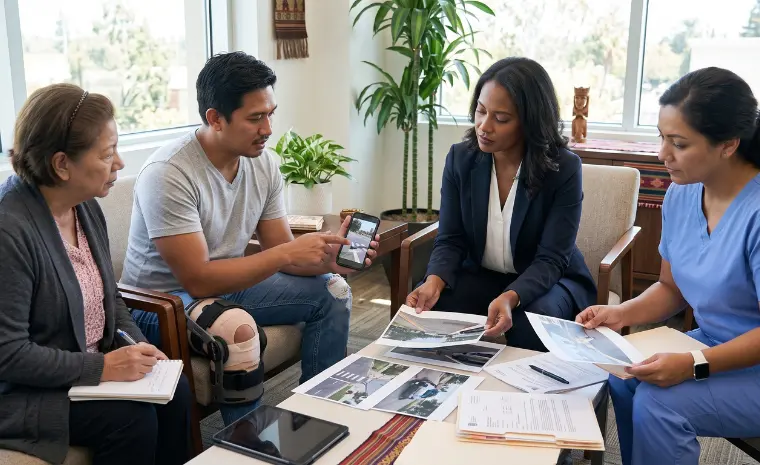
Liability usually depends on negligence and duty of care under California Civil Code 1714(a). Drivers of motor vehicles must use reasonable care to avoid harming pedestrians, while pedestrians also have responsibilities when crossing or entering the roadway.
When evaluating accident liability, attorneys and insurance companies may review:
- Whether the driver failed to yield
- Whether speeding or distracted driving contributed
- Whether the pedestrian followed traffic signals
- Whether poor visibility affected the crash
- Whether another driver contributed
- Whether dangerous roadway conditions played a role
California also follows a system of shared fault, which means more than one party may be responsible for the same accident. This is important in both pedestrian claims and other car accidents because compensation may be reduced according to each party’s percentage of fault.
When Can a Driver Be Held Responsible?
A driver may be liable when negligent driving causes a pedestrian injury.
Common examples include:
- Failing to yield at a crosswalk
- Speeding through high-traffic areas
- Running a red light or stop sign
- Ignoring crosswalk signals
- Making an unsafe turn
- Driving while distracted
- Driving under the influence
- Failing to slow down near schools
- Passing another vehicle stopped for pedestrians
- Driving too fast for the weather or visibility conditions
Consider a driver making a right turn while looking left for approaching vehicles. If the driver enters the crosswalk without checking for a family already crossing, that failure to look may support a negligence claim.
California Vehicle Code §21456 also regulates pedestrian control signals, including WALK, flashing DON’T WALK, and countdown signals.
Even when pedestrians have the right-of-way, families should still teach children to wait until vehicles have stopped and make themselves as visible as possible. Bright clothing and reflective materials may help, especially during school hours, at dusk, or on poorly lit streets.
Pedestrians should also pay close attention around school buses, parking lots, driveways, and commercial entrances, where vehicles frequently turn.
Can a Pedestrian Be Partially at Fault for an Accident?
Yes. California uses pure comparative fault. This means an injured pedestrian may still recover compensation even if they share some responsibility, but their recovery may be reduced according to their percentage of fault.
California adopted pure comparative negligence in Li v. Yellow Cab Co., allowing partially responsible plaintiffs to recover damages reduced in proportion to fault.
For example, suppose a pedestrian suffers $100,000 in damages but is found 20% responsible because they entered the road outside a crosswalk when traffic was approaching.
The potential recovery could be reduced to $80,000.
California Vehicle Code §21954 generally requires pedestrians crossing outside marked or unmarked crosswalks to yield to vehicles that are close enough to create an immediate hazard. However, drivers still retain a duty to exercise due care for pedestrians in the roadway.
This is why determining who is liable for a pedestrian accident often requires careful analysis.
An insurance company may try to place excessive blame on the pedestrian. Insurance adjusters may argue that the pedestrian:
- Crossed outside a crosswalk
- Was distracted
- Ignored traffic signals
- Entered the roadway suddenly
- Wore dark clothing
- Failed to notice the vehicle
Those arguments should be compared with the actual evidence, including vehicle speed, driver distraction, roadway design, and whether the motorist had enough time to react.
Can Government Agencies or Property Owners Be Liable?
Sometimes, the driver is not the only potentially responsible party.
Government Agencies
A city, county, or other public entity may potentially face liability when a dangerous public property condition contributes to a pedestrian crash.
Examples may involve:
- Broken or missing traffic signals
- Poorly designed intersections
- Inadequate visibility
- Dangerous crosswalk placement
- Missing signs and signals
- Defective street lighting
- Unaddressed roadway hazards
Claims against government agencies follow special procedures and much shorter deadlines than ordinary personal injury cases. California Courts explains that a personal-injury claim against a government agency generally must first be presented to the agency within six months.
These deadlines make early legal review especially important.
Property Owners
A private property owner may also become relevant when conditions on the property contribute to the crash.
For example, overgrown landscaping may block a driver’s view of pedestrians exiting a shopping center. Poor parking-lot design or inadequate lighting may also create dangerous conflicts between vehicles and walkers.
Liability depends on whether the owner had a legal duty, knew or should have known about the danger, and failed to take reasonable steps to address it.
For families, this means the answer to who is liable for a pedestrian accident may extend beyond the individual driver.
What Evidence Helps Prove Liability in a Pedestrian Accident?
Evidence from the accident scene can play a major role in proving what happened.
Useful evidence may include:
Evidence | Why It Matters |
Police report | Documents initial observations and parties involved |
Photos and video | Shows roadway layout, vehicle damage, and visibility |
Witness statements | Provides independent accounts |
Traffic-camera footage | May show speed, signals, or right-of-way |
Security cameras | Can capture the crash from nearby homes or businesses |
Medical records | Documents injuries and treatment |
Vehicle data | May show braking or speed before impact |
Phone records | May support distracted-driving allegations |
Property records | May support claims involving unsafe premises or visibility hazards |
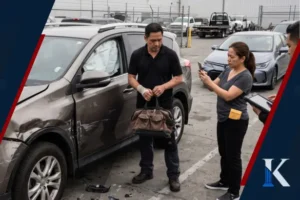
Families should also photograph vehicle damage and any property damage near the scene, including damaged signs, fencing, bicycles, or personal belongings.
If the pedestrian suffered a serious injury such as a traumatic brain injury, early medical documentation becomes especially important because symptoms may continue or worsen over time.
How Filipino Families Can Protect Their Right to Compensation
After a serious pedestrian crash, families often face more than immediate medical care. They may also deal with medical bills, missed work, transportation costs, and long-term recovery needs.
A personal injury claim may seek compensation for:
- Medical bills
- Future treatment
- Lost wages
- Reduced earning capacity
- Pain and suffering
- Emotional distress
- Permanent disability
- Property damage
- In some cases, loss of consortium
Loss of consortium generally refers to harm to the marital relationship caused by serious injury, such as loss of companionship, affection, or support.
Families should also be aware of the statute of limitations. California personal injury law generally gives injured people a limited amount of time to file a lawsuit, and shorter deadlines may apply when a government agency is involved.
Because these deadlines can vary, early legal guidance may help protect the claim before important evidence disappears.
How a Pedestrian Accident Attorney in California Can Help
A pedestrian accident attorney in California can conduct a detailed case evaluation to determine who may be responsible and what evidence is available.
Our attorney may:
- Investigate the accident scene
- Review police and traffic reports
- Obtain security camera footage
- Analyze shared fault
- Identify all responsible drivers or property owners
- Evaluate traumatic brain injury and other serious injuries
- Calculate medical bills and future care
- Review property damage
- Determine whether loss of consortium may apply
- Monitor the statute of limitations
- Handle settlement negotiations
- Prepare the case for litigation if necessary
A thorough case evaluation can also determine whether accident liability extends beyond the driver to a government agency, employer, or property owner.
This is especially important in complex pedestrian cases involving multiple motor vehicles or dangerous road conditions.
Frequently Asked Questions
Is the driver always liable when a pedestrian is hit?
No. Drivers are often responsible when they fail to yield or drive negligently, but liability depends on all the facts. A pedestrian, government agency, property owner, employer, or another party may share responsibility.
Can I recover compensation if I crossed outside a crosswalk?
Possibly. California follows comparative fault, so crossing outside a crosswalk does not automatically prevent recovery. Your compensation may be reduced if your actions contributed to the accident.
What if broken crosswalk signals contributed to the crash?
A government agency responsible for maintaining traffic-control equipment may potentially be involved. These cases have special claim procedures and short deadlines, so prompt legal review is important.
What compensation may be available after a pedestrian injury?
Compensation may include medical expenses, lost wages, future care, pain and suffering, emotional distress, and other documented losses. The value depends on injury severity, liability, insurance coverage, and evidence.
When should I contact a pedestrian accident attorney in California?
Consider speaking with an attorney as soon as possible when the pedestrian suffered injuries, fault is disputed, a government agency may be involved, or insurance adjusters are requesting statements or offering a settlement.
Protecting Your Family After a Pedestrian Accident
Understanding who is liable for a pedestrian accident can help families avoid assumptions about fault and focus on the evidence that actually matters.
California pedestrian cases may involve drivers, pedestrians, government agencies, employers, or property owners. The right legal strategy depends on how the crash happened, what traffic laws applied, and what evidence can still be preserved.
Kapwa Justice supports Filipino-American families across California with culturally responsive legal guidance. Kung ikaw o ang isang mahal sa buhay ay nasaktan sa pedestrian accident, hindi ninyo kailangang harapin ang proseso nang mag-isa.