Table of Contents
Summary
A California traffic collision report can play an important role after a car accident by documenting key facts about the crash. While it does not automatically determine fault, it may become valuable evidence when dealing with insurance companies or pursuing a personal injury claim in California.
Why a Traffic Collision Report Matters
A car accident can leave families feeling overwhelmed. Between medical treatment, vehicle repairs, insurance calls, and missed work, it may be difficult to know where to start. One document that often becomes important early in the process is the California traffic collision report.
Whether the collision happened on Interstate 5, I-880, US-101, or a neighborhood street in Daly City, Los Angeles, Sacramento, or San Diego, an accident report may help preserve important details while the events are still fresh.
Although the report does not automatically establish fault, insurance companies, investigators, and personal injury lawyers may use it to understand how the crash occurred. It can also become an important piece of evidence in a personal injury case.
What Is a California Traffic Collision Report?
A California traffic collision report is an official record prepared by a law enforcement agency after an investigation into a motor vehicle accident.
Depending on where the crash occurred, the report may be completed by:
- The California Highway Patrol
- A local police department
- A county sheriff’s office
Drivers may request a copy from the investigating agency or the appropriate California Highway Patrol Office. The report may document:
- The crash date, time, and location
- Driver and vehicle information
- Insurance details
- Road and weather conditions
- Statements from drivers and witnesses
- Officer observations
- Vehicle damage and impact points
- A diagram of the accident scene
- Possible violations of the California Vehicle Code
The investigating officer may also identify factors such as speeding, unsafe lane changes, failure to yield, or distracted driving. However, an officer’s conclusion does not automatically determine civil liability.
When Is a Collision Report Required?
Not every minor collision results in a police investigation. However, California drivers have a legal reporting duty when an accident causes injury, death, or property damage exceeding the applicable reporting threshold.
The California Vehicle Code also requires drivers involved in qualifying accidents to stop, exchange information, and provide reasonable assistance to any injured person. In certain cases, the accident must also be reported to the California Department of Motor Vehicles.
Prompt reporting can:
- Create an official record of the collision
- Preserve witness and insurance information
- Document roadway and weather conditions
- Identify possible traffic violations
- Support a later insurance claim or personal injury case
Reporting requirements and filing deadlines are separate issues. The statute of limitations controls how long an injured person generally has to bring a lawsuit. In most California personal injury cases, the deadline is two years from the date of injury, although exceptions may apply.
What Information Is Included in the Accident Report?
The details included in an accident report can help explain what happened and identify areas requiring further investigation.
Report Information | Why It May Matter |
Driver details | Identifies the motorists involved |
Insurance information | Helps locate available coverage |
Vehicle damage | May show the direction and force of impact |
Witness statements | Provides independent observations |
Officer narrative | Summarizes the initial investigation |
Weather conditions | May explain visibility or roadway hazards |
Traffic citations | May identify a California Vehicle Code violation |
Crash diagram | Shows vehicle positions and travel directions |
For example, an officer may document whether a driver appeared to be using a phone before the crash. Evidence of distracted driving may later support an argument that the driver failed to use reasonable care.
How a Collision Report Can Help Your Injury Claim
A California traffic collision report may become one of several important pieces of evidence in a personal injury case. It may help confirm the location of the crash, identify witnesses, and document statements made soon after the collision.
Insurance adjusters and personal injury lawyers may compare the report with:
- Photographs and video footage
- Vehicle repair estimates
- Medical records
- Proof of medical treatment
- Cellphone records
- Witness testimony
- Dashcam or surveillance footage
- Accident reconstruction findings
A report documenting distracted driving, an unsafe turn, or another violation of the California Vehicle Code may strengthen a claim. Still, each case must be evaluated using all available evidence.
The statute of limitations also underscores the importance of early evidence preservation. Waiting too long may result in lost video, unavailable witnesses, or deleted electronic records.
What If the Report Contains Errors?
Police officers gather information under difficult conditions, so an accident report may occasionally contain factual errors or missing details.
Common mistakes include:
- Misspelled names
- Incorrect vehicle descriptions
- Missing witness information
- Inaccurate insurance details
- Incorrect weather conditions
- Errors in the collision diagram
- An incomplete description of medical treatment
If you notice a mistake, request information from the agency that prepared the report. Depending on the situation, you may be able to submit documents or a written statement asking that additional information be attached.
A California law firm can also review whether an error is likely to affect your personal injury case. The officer’s report is important, but it is not the only evidence that determines fault.
Other Evidence That Can Strengthen Your Case
An accident report may be valuable, but it should be supported by other documentation whenever possible.
Useful evidence may include:
- Photos of the vehicles and the crash scene
- Medical records and bills
- Proof of ongoing medical treatment
- Dashcam or surveillance footage
- Witness names and contact details
- Employment records showing lost income
- Cellphone records in distracted driving cases
- Vehicle inspection and repair records
- Copies of insurance correspondence
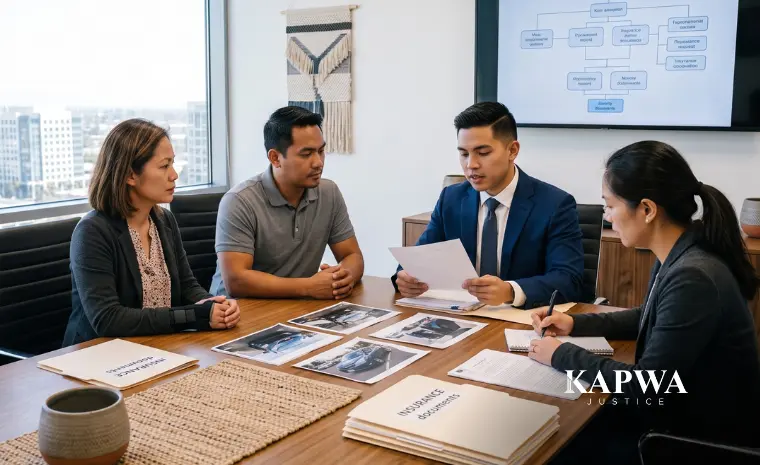
Keep these records organized and avoid altering the original files. The stronger the documentation, the easier it may be for a law firm to evaluate liability, damages, and available insurance coverage.
How a Car Accident Attorney Near Me Can Help
Searching for a car accident attorney near you can help your family find guidance after a serious collision. Experienced personal injury lawyers may review the accident report, examine California Vehicle Code issues, and identify evidence that the initial investigation overlooked.
A lawyer may help by:
- Requesting records from the appropriate California Highway Patrol Office
- Reviewing the California traffic collision report for errors
- Investigating distracted driving or other negligent behavior
- Preserving video and electronic evidence
- Documenting medical treatment and future care needs
- Calculating lost earnings and other damages
- Communicating with insurance companies
- Monitoring the applicable statute of limitations
- Preparing and filing a personal injury case when necessary
Choosing a law firm familiar with California accident claims can make the process easier to understand. A knowledgeable car accident attorney near you can explain what the report means, what additional proof may be required, and what steps can protect your family’s rights.
Frequently Asked Questions
How do I get a California traffic collision report?
You can usually request a copy from the law enforcement agency that investigated the accident, such as the California Highway Patrol or a local police department.
Is a traffic collision report required after every accident?
No. Reporting requirements depend on factors such as injuries, fatalities, and property damage. Certain accidents must also be reported to the California DMV.
Can I file a claim without a police report?
Yes. While a collision report is often helpful, other evidence—including medical records, photographs, and witness statements—may also support your claim.
What if I disagree with the officer's report?
You should review the report carefully, gather supporting evidence, and speak with an attorney if factual inaccuracies could affect your claim.
When should I contact a car accident attorney near me?
It is generally helpful to speak with a car accident attorney near you as soon as possible after an accident, especially if injuries, disputed liability, or insurance complications are involved.
Kapwa Justice Is Here for California Families
After a serious accident, your family deserves answers, compassion, and trusted guidance. A California traffic collision report is only one part of understanding what happened and protecting your legal rights.
If you have questions about your accident or the claims process, Kapwa Justice is here to support Filipino families throughout California with culturally responsive legal guidance. Contact us today for a free consultation and learn how we may help you move forward with confidence.