
Table of Contents
Summary
Even if you are partially at fault for a slip and fall, California law may still allow you to seek compensation. This guide explains comparative negligence, how shared fault affects settlements, common accident scenarios, and evidence supporting a claim—helping Filipino-American families understand their rights and legal options after a slip-and-fall accident.
A sudden fall can leave families dealing with pain, confusion, and unexpected expenses. Many people hesitate to pursue a case because they believe they may be partially at fault for a slip and fall, especially if they were distracted or unsure about what caused the accident.
In California, however, the law recognizes that accidents often involve shared responsibility. Even if you contributed to the incident, you may still have the right to seek compensation for injuries and financial losses. Understanding how liability works can help families make informed decisions after a serious accident.
Understanding California’s Comparative Negligence Law
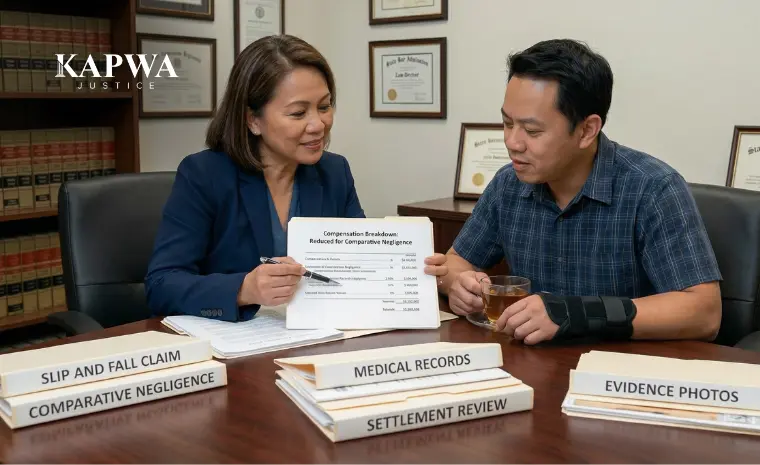
California follows a legal rule called pure comparative negligence under Civil Code § 1431.2. This means you can recover compensation even if you were 99% at fault; your recovery is simply reduced by your percentage of fault. This principle allows injured individuals to recover compensation even if they share some responsibility for the incident.
The rule is rooted in California Civil Code §1714, which establishes that people must exercise ordinary care in managing their property. In simple terms, a property owner can be held responsible if they fail to maintain safe conditions that prevent harm to others.
Under this law:
- A person who suffers a slip-and-fall may still pursue compensation.
- Fault can be divided between multiple parties.
- Compensation is reduced by the percentage of responsibility assigned to the injured person.
For example:
Scenario | Fault Assigned | Possible Outcome |
Hazard left unattended | Property owner 100% | Full compensation possible |
Both parties contributed | Property owner 70%, victim 30% | Damages reduced by 30% |
Victim primarily responsible | Victim 80%, property owner 20% | Recovery reduced by 80% (can still receive 20%) |
Even if you were partially at fault for a slip and fall, California law may still allow recovery for damages.
How Shared Fault Can Affect Your Compensation
A fall can lead to serious consequences for families, including medical care and time away from work. Compensation may cover:
- Medical bills and ongoing treatment
- Lost wages or reduced ability to work
- Medical expenses related to rehabilitation
- Costs connected to recovery
However, if a court determines that someone was partially at fault for a slip-and-fall, the final compensation may be reduced based on their percentage of responsibility.
For example, if the average slip-and-fall settlement in a case is $100,000 and the injured person is found to be 25% responsible, the compensation could be reduced to $75,000. This system ensures accountability while still allowing injured people to pursue financial recovery.
Common Situations Where Fault May Be Disputed
Disputes often arise when both sides present different explanations for the accident.
Examples include:
- A wet floor inside a grocery store that lacked warning signs
- Uneven pavement in a parking lot
- Unsafe stairwell railings in an apartment building
- Debris or hazards at a construction site
- Slippery ice and snow surfaces in poorly maintained areas
Other factors may also be considered. For instance, a defense may argue that worn-out footwear contributed to the fall.
Because these cases involve multiple variables, determining liability requires a careful review of evidence.
Evidence That Helps Prove Property Owner Responsibility
Strong evidence is crucial to establishing liability in a slip-and-fall accident.
Key evidence may include:
- Incident reports created at the time of the accident
- Photographs of the dangerous condition
- Medical records documenting slip and fall injuries
- Witness statements from bystanders
- Security footage
- Maintenance logs from the property
Professional analysis may also help support the case.
- Expert testimony can explain how the hazard caused the fall.
- Witness testimony may confirm that the area was unsafe.
These details help clarify whether the property was reasonably maintained.
Examples of Partial Fault in Slip and Fall Cases
Real-world incidents often involve shared responsibility.
Examples may include:
- A person walking across a wet plastic ramp while checking their phone
- Someone slipping while carrying heavy personal property in a crowded store
- A shopper not noticing the warning signs near a spill
These scenarios illustrate why courts analyze each situation carefully before assigning responsibility.
How Insurance Companies Try to Shift Blame
After an accident, insurance companies may attempt to minimize payouts. One common tactic is to argue that the injured person caused the accident.
An insurance adjuster might claim:
- The victim was distracted
- The hazard was obvious
- The injured person failed to seek medical attention quickly
This strategy can reduce the value of accident claims or discourage victims from pursuing compensation.
Kaya mahalagang maging maingat sa pakikipag-usap sa mga insurance company bago magsabi ng anumang detalye tungkol sa aksidente.
Why Legal Guidance Matters in Shared-Fault Claims
Cases involving shared responsibility can become complicated. The legal process often requires detailed investigation and negotiation.
A knowledgeable personal injury attorney or personal injury lawyer may help by:
- Reviewing evidence and determining liability
- Gathering documents related to personal injury claims
- Working with a skilled legal team
- Calculating damages, including lost earnings and future care
- Negotiating with insurers to protect the client’s rights
In many cases, experienced advocates—such as the best slip-and-fall lawyers in California—help ensure victims are not unfairly blamed for accidents caused by unsafe conditions.
Simulan ang Iyong Libreng Konsultasyon Ngayon
A fall can cause serious harm, including bone fractures, head injuries, and long recovery periods. Families may face rising medical bills, reduced income, and uncertainty about the future.
If you believe you may be partially at fault for a slip and fall, do not assume you have no legal options. California law recognizes that accidents often involve multiple factors, and injured individuals may still pursue compensation.
At Kapwa Justice, we help Filipino-American families better understand their rights under California laws. Our team connects community members with resources and legal professionals who can evaluate their injury claim and guide them through the next steps.
👉 Free consultations are available. Contact us today to speak with our team about your accident and explore your legal options.
FAQs
How long does a slip and fall claim usually take?
The timeline varies depending on the severity of injuries, available evidence, and negotiations with insurers. Some cases resolve in months, while others may take longer if disputes over liability or damages arise.
What if the accident happened at a business or store?
Businesses have a duty to maintain reasonably safe conditions for visitors. If hazards such as spills, uneven flooring, or poorly maintained walkways caused the accident, the business may be responsible for failing to address the risk.
What types of damages can be recovered?
Compensation may include medical expenses, lost wages, rehabilitation costs, and other financial losses related to the accident.